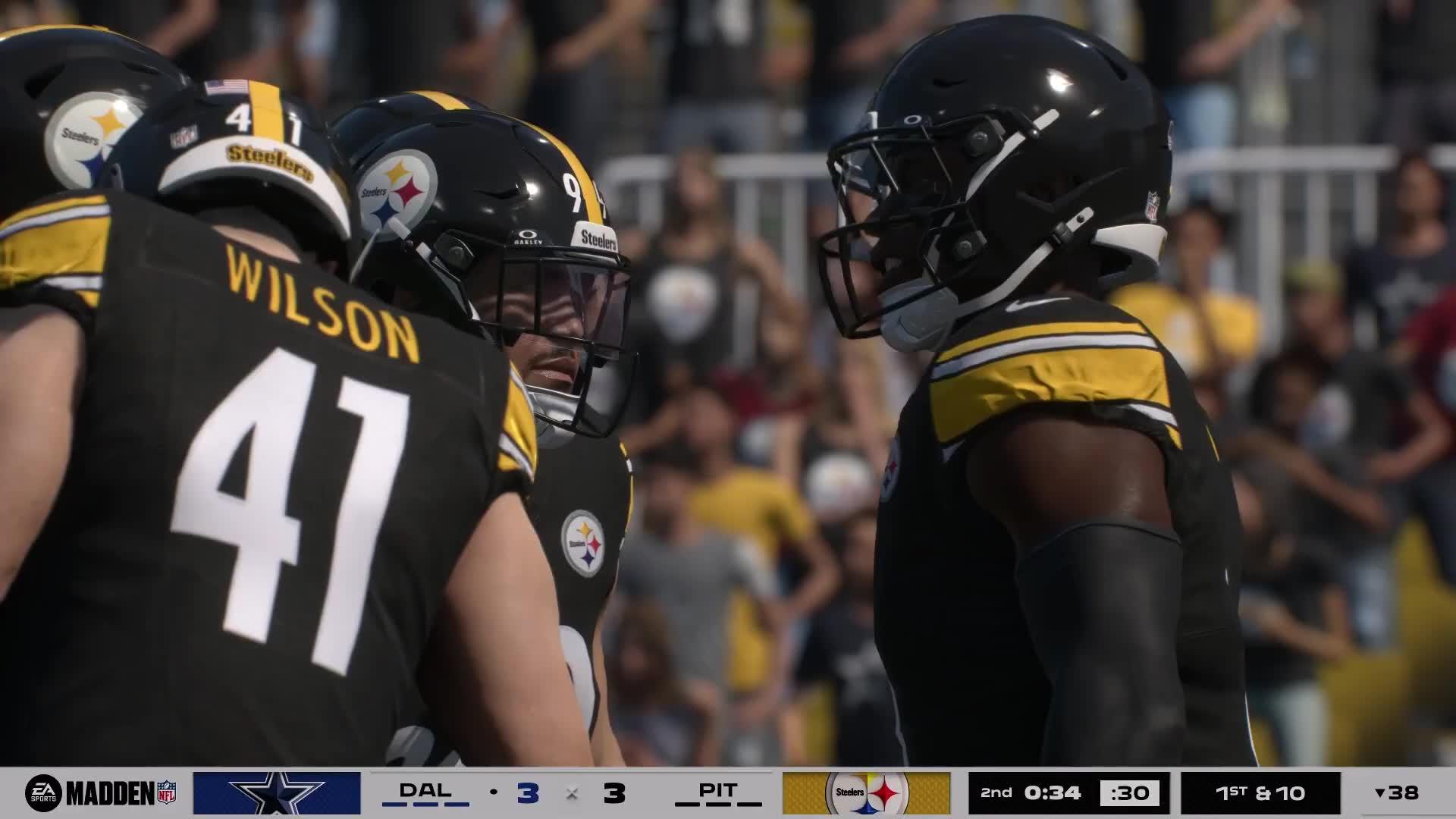



Sports video games have always attempted to mirror real athletes, but the relationship between real-world performance and virtual ratings has traditionally been limited.
Madden NFL 27 pushes that relationship further by embracing analytical data as a major component of its simulation philosophy.
Through connections with Pro Football Focus and Next Gen Stats, the game is designed to reflect changes in real NFL performance. That means virtual players can evolve as the real season develops.
This creates an important distinction between a static roster and a living football simulation.
At launch, players enter the game with established ratings and tendencies. But the NFL does not remain static. Rookies improve, veterans decline, injuries alter roles, and coaching decisions change how players are used.
A dynamic ratings system can represent those developments.
Consider a rookie offensive lineman who begins the season as an unknown quantity. If he consistently performs well in pass protection, his real-world reputation can rise. A game that incorporates updated analytical information can then reflect that improvement.
The same applies to quarterbacks.
Traditional statistics might show how many touchdowns a quarterback throws, but modern analysis can reveal much more. Pressure response, throwing efficiency, movement, and other factors help explain why a quarterback is succeeding.
In a scouting-oriented simulation, those details can matter.
This approach changes how users think about ratings.
An overall number remains useful, but it no longer tells the entire story. A player can be valuable because of specific strengths that match a particular system.
A defensive coordinator might value a cornerback with excellent coverage skills even if another player has a slightly higher overall rating. An offensive coach might prefer a receiver whose route-running profile matches the team's passing concepts.
The game therefore becomes more analytical.
For users building competitive rosters, that can influence how they allocate resources. Some may use buy Mut 27 coins as a way to quickly pursue new roster options, but the analytical nature of the game makes timing and evaluation equally important.
A player who looks undervalued early in the season could become a major asset after several strong performances.
That creates an interesting form of speculation within the virtual league.
The concept resembles what real general managers do. They attempt to identify players whose current performance or underlying abilities suggest future value.
Madden NFL 27 allows users to participate in that process.
This is particularly relevant to Franchise mode.
A general manager cannot simply build a roster based on today's ratings. Long-term planning requires anticipating how players will develop. Younger players may become stars, while established veterans may gradually decline.
The Persona Engine adds another dimension by modeling player behavior and motivations.
Now the user has to evaluate not just physical ability but the likelihood that a player will fit the organization over time.
That makes the scouting process more sophisticated.
A player who produces impressive numbers might still be difficult to retain. Another might accept a smaller role and become a valuable depth piece.
The result is a more realistic representation of roster management.
The real-world connection also creates a compelling viewing experience. Fans can watch an NFL game and immediately understand that what they are seeing may eventually influence Madden.
A breakout performance is no longer just a statistic. It can become a meaningful development in the virtual league.
Save on Madden 27 Coins for PS5, Xbox Series X, and PC with U4GM. Take advantage of great discounts, rapid delivery, and reliable customer support available 24/7.
https://www.u4gm.com/madden-nfl-27/coins
Madden NFL 27 pushes that relationship further by embracing analytical data as a major component of its simulation philosophy.
Through connections with Pro Football Focus and Next Gen Stats, the game is designed to reflect changes in real NFL performance. That means virtual players can evolve as the real season develops.
This creates an important distinction between a static roster and a living football simulation.
At launch, players enter the game with established ratings and tendencies. But the NFL does not remain static. Rookies improve, veterans decline, injuries alter roles, and coaching decisions change how players are used.
A dynamic ratings system can represent those developments.
Consider a rookie offensive lineman who begins the season as an unknown quantity. If he consistently performs well in pass protection, his real-world reputation can rise. A game that incorporates updated analytical information can then reflect that improvement.
The same applies to quarterbacks.
Traditional statistics might show how many touchdowns a quarterback throws, but modern analysis can reveal much more. Pressure response, throwing efficiency, movement, and other factors help explain why a quarterback is succeeding.
In a scouting-oriented simulation, those details can matter.
This approach changes how users think about ratings.
An overall number remains useful, but it no longer tells the entire story. A player can be valuable because of specific strengths that match a particular system.
A defensive coordinator might value a cornerback with excellent coverage skills even if another player has a slightly higher overall rating. An offensive coach might prefer a receiver whose route-running profile matches the team's passing concepts.
The game therefore becomes more analytical.
For users building competitive rosters, that can influence how they allocate resources. Some may use buy Mut 27 coins as a way to quickly pursue new roster options, but the analytical nature of the game makes timing and evaluation equally important.
A player who looks undervalued early in the season could become a major asset after several strong performances.
That creates an interesting form of speculation within the virtual league.
The concept resembles what real general managers do. They attempt to identify players whose current performance or underlying abilities suggest future value.
Madden NFL 27 allows users to participate in that process.
This is particularly relevant to Franchise mode.
A general manager cannot simply build a roster based on today's ratings. Long-term planning requires anticipating how players will develop. Younger players may become stars, while established veterans may gradually decline.
The Persona Engine adds another dimension by modeling player behavior and motivations.
Now the user has to evaluate not just physical ability but the likelihood that a player will fit the organization over time.
That makes the scouting process more sophisticated.
A player who produces impressive numbers might still be difficult to retain. Another might accept a smaller role and become a valuable depth piece.
The result is a more realistic representation of roster management.
The real-world connection also creates a compelling viewing experience. Fans can watch an NFL game and immediately understand that what they are seeing may eventually influence Madden.
A breakout performance is no longer just a statistic. It can become a meaningful development in the virtual league.
Save on Madden 27 Coins for PS5, Xbox Series X, and PC with U4GM. Take advantage of great discounts, rapid delivery, and reliable customer support available 24/7.
https://www.u4gm.com/madden-nfl-27/coins
Sports video games have always attempted to mirror real athletes, but the relationship between real-world performance and virtual ratings has traditionally been limited.
Madden NFL 27 pushes that relationship further by embracing analytical data as a major component of its simulation philosophy.
Through connections with Pro Football Focus and Next Gen Stats, the game is designed to reflect changes in real NFL performance. That means virtual players can evolve as the real season develops.
This creates an important distinction between a static roster and a living football simulation.
At launch, players enter the game with established ratings and tendencies. But the NFL does not remain static. Rookies improve, veterans decline, injuries alter roles, and coaching decisions change how players are used.
A dynamic ratings system can represent those developments.
Consider a rookie offensive lineman who begins the season as an unknown quantity. If he consistently performs well in pass protection, his real-world reputation can rise. A game that incorporates updated analytical information can then reflect that improvement.
The same applies to quarterbacks.
Traditional statistics might show how many touchdowns a quarterback throws, but modern analysis can reveal much more. Pressure response, throwing efficiency, movement, and other factors help explain why a quarterback is succeeding.
In a scouting-oriented simulation, those details can matter.
This approach changes how users think about ratings.
An overall number remains useful, but it no longer tells the entire story. A player can be valuable because of specific strengths that match a particular system.
A defensive coordinator might value a cornerback with excellent coverage skills even if another player has a slightly higher overall rating. An offensive coach might prefer a receiver whose route-running profile matches the team's passing concepts.
The game therefore becomes more analytical.
For users building competitive rosters, that can influence how they allocate resources. Some may use buy Mut 27 coins as a way to quickly pursue new roster options, but the analytical nature of the game makes timing and evaluation equally important.
A player who looks undervalued early in the season could become a major asset after several strong performances.
That creates an interesting form of speculation within the virtual league.
The concept resembles what real general managers do. They attempt to identify players whose current performance or underlying abilities suggest future value.
Madden NFL 27 allows users to participate in that process.
This is particularly relevant to Franchise mode.
A general manager cannot simply build a roster based on today's ratings. Long-term planning requires anticipating how players will develop. Younger players may become stars, while established veterans may gradually decline.
The Persona Engine adds another dimension by modeling player behavior and motivations.
Now the user has to evaluate not just physical ability but the likelihood that a player will fit the organization over time.
That makes the scouting process more sophisticated.
A player who produces impressive numbers might still be difficult to retain. Another might accept a smaller role and become a valuable depth piece.
The result is a more realistic representation of roster management.
The real-world connection also creates a compelling viewing experience. Fans can watch an NFL game and immediately understand that what they are seeing may eventually influence Madden.
A breakout performance is no longer just a statistic. It can become a meaningful development in the virtual league.
Save on Madden 27 Coins for PS5, Xbox Series X, and PC with U4GM. Take advantage of great discounts, rapid delivery, and reliable customer support available 24/7.
https://www.u4gm.com/madden-nfl-27/coins
0 Comments
0 Shares
81 Views
0 Reviews